Designing for Better Listening
The best sound design is often the one you barely notice.
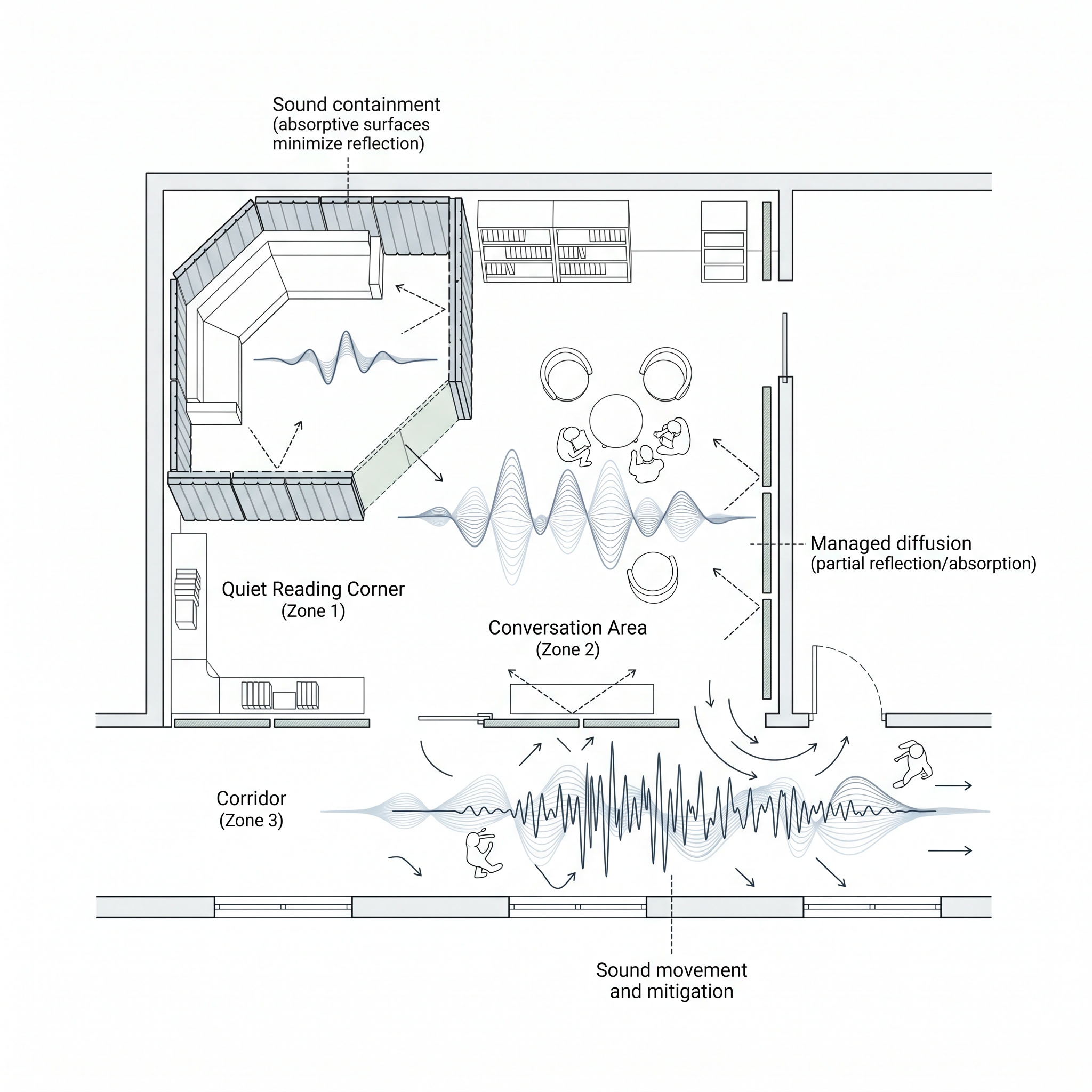
When we talk about architecture, we usually ask what a building looks like. Sound asks a different question: what does this place allow? Can people hear each other without strain? Can they think without being overwhelmed? Can they rest without every small noise becoming a disruption? These are basic design questions, but they shape daily life in powerful ways.
Good acoustic design is not about making everything silent. Total silence is not the goal, and in many places it would feel strange or even uncomfortable. The aim is balance: enough softness to reduce fatigue, enough clarity for speech, enough texture to make a place feel alive. A school needs intelligibility. A hospital needs calm. A shared home needs privacy and generosity at the same time. Each space asks for a different acoustic answer.
This is where the idea of sound as architecture becomes practical. It moves from metaphor to method. It asks designers, planners, and even everyday listeners to pay attention to what sound is doing in a place. It also gives us a useful habit: when a room feels right, ask why. Often the answer is not just furniture or light. It is the quiet work of walls, ceilings, materials, and distance.
Listening well is a form of design literacy. And once you notice it, you start to hear it everywhere.