Attention Has Its Own Acoustics
What we hear changes what we notice next.
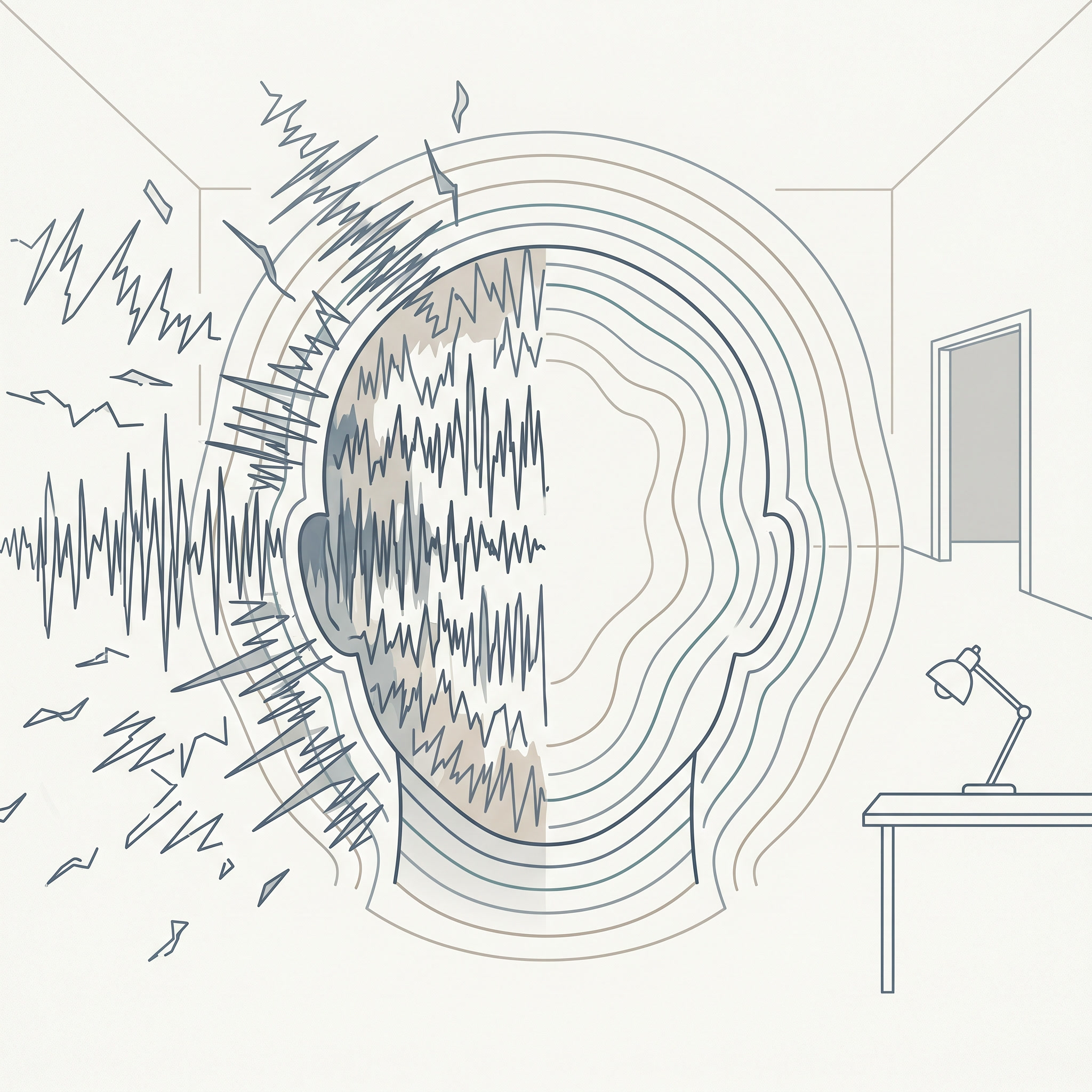
Sound does not only shape spaces around us. It shapes the space inside our attention. A sudden noise can pull focus instantly. A steady hum can either disappear from awareness or become impossible to ignore. Music in a café can make conversation feel easier or more crowded. Silence can help us think, but only if it is the kind of silence that feels open rather than tense.
This is why acoustic environments affect learning, work, and rest so strongly. A classroom with too much echo asks students to work harder just to follow speech. An office with constant interruptions fractures concentration into small pieces. A home with a quiet corner can become a place where reading, memory, or recovery is easier because the room supports attention instead of fighting it.
There is a deeper point here. We often imagine attention as a purely mental act, as if it happens separately from the body and the room. But attention is shaped by surroundings. Sound can narrow it, scatter it, steady it, or soften it. The design of an environment influences the kind of mind we can bring to it.
That makes sound a cultural question as well as a technical one. What kinds of listening do our buildings encourage? What kinds of focus do they protect? And whose comfort do they treat as worth designing for? Those questions are architectural, but they are also social.