Materials Shape What We Feel
Walls do not just stand there. They listen back.
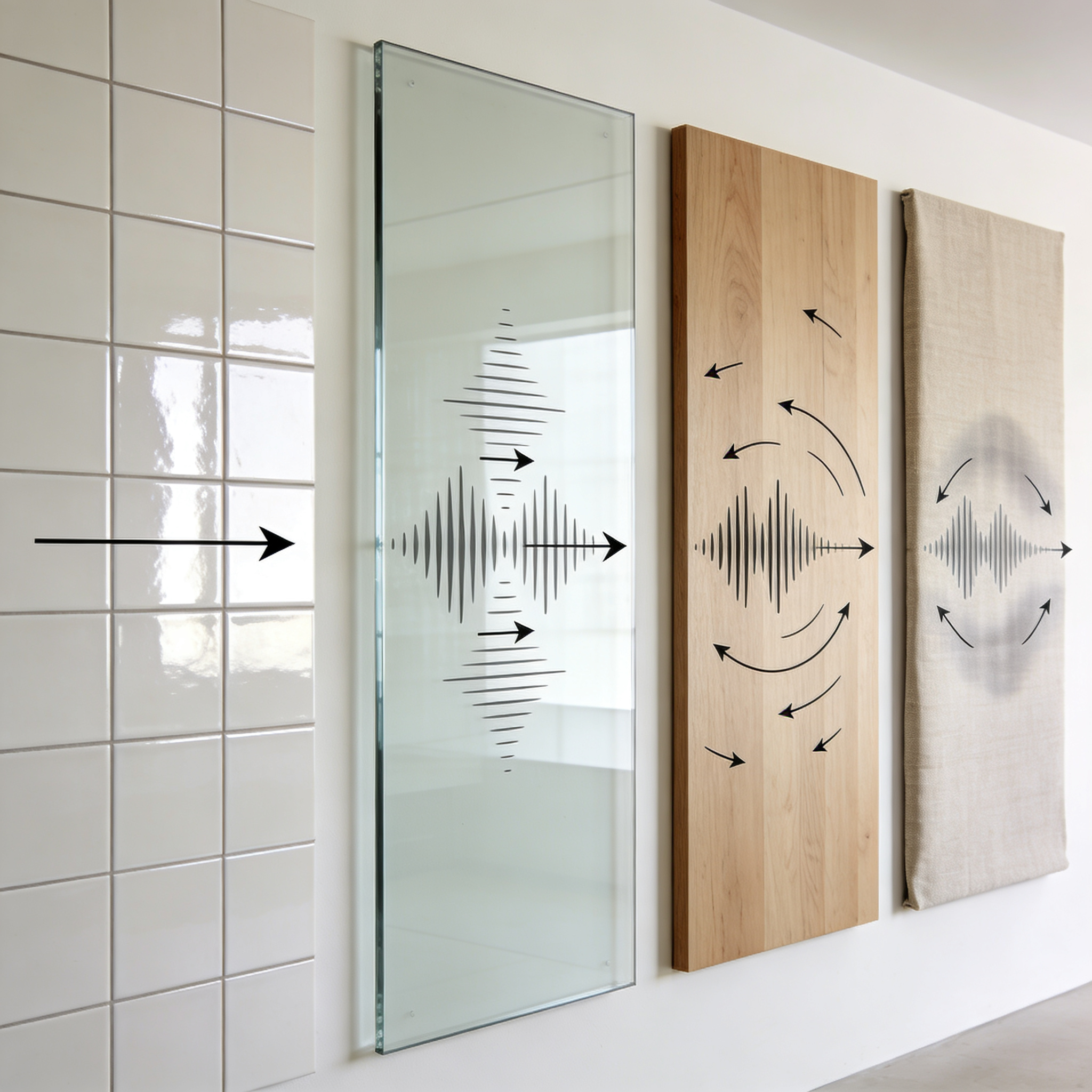
Architecture often gets discussed as shape, but shape is only part of the story. Materials decide what sound can do. A tiled bathroom turns every small noise into something bright and quick. A carpeted library softens movement until the room seems to breathe more slowly. A wooden ceiling can warm a space because it changes how sound returns to us. These effects are not decorative. They alter mood, pace, and attention.
In that sense, building materials are also attention tools. They can make a place feel restless or restful, exposed or intimate. Think of how a café becomes harder to concentrate in when the room is full of hard surfaces and overlapping voices. Or how a studio can feel calm when the walls absorb noise and the space settles into a low hum. The physical design of sound affects how we work, rest, talk, and think.
This is one reason acoustic design matters in schools, hospitals, homes, and public buildings. If a place is too loud, people tire faster. If it is too echoic, speech becomes harder to follow. Good sound design does not always announce itself. Often, its job is to help us feel at ease without making a scene. It is architecture that stays in the background so other things can come forward.